Route
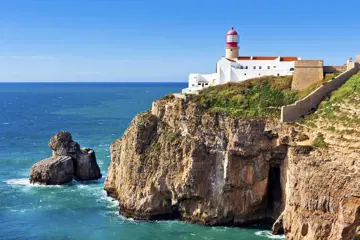
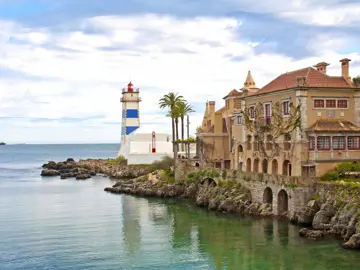
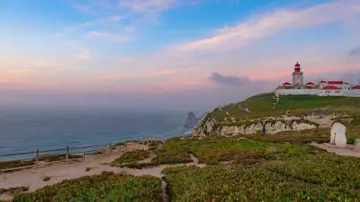
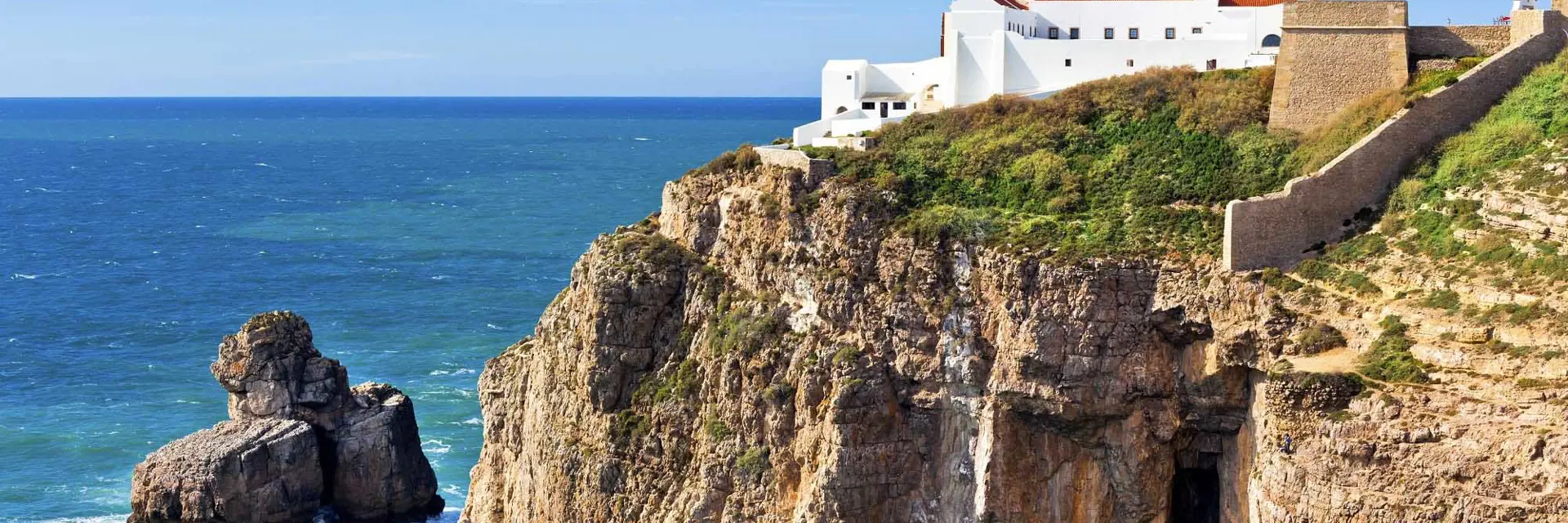
You start in Lisbon and drive directly to Cascais. From there you follow the Atlantic coast to the westernmost point of mainland Europe at Cabo da Roca. The journey then continues south along the coast of Setúbal and Comporta, passing fishing villages and the natural landscapes of the Costa Vicentina. The trip ends in Sagres and at Cabo São Vicente, where the cliffs drop straight into the ocean.
###Pace A relaxed rhythm with three stays. Two nights near Cascais, four nights on the coast around Comporta or Santiago do Cacém and three nights around Sagres. This allows you to explore different parts of Portugal’s west coast without changing hotels every day.
Highlights
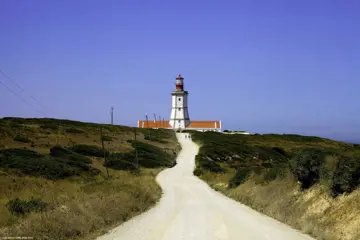
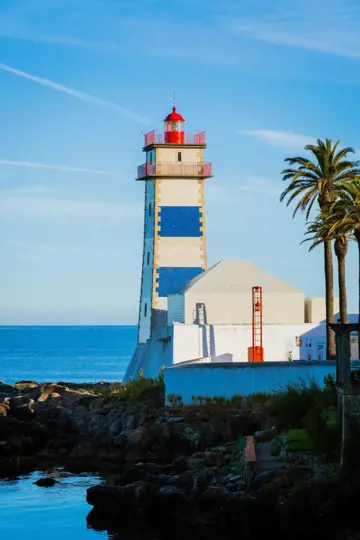
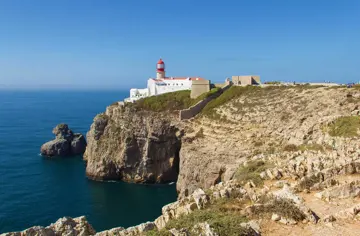
Cabo da Roca, the westernmost point of mainland Europe. The lighthouse of Cabo Espichel and the coast near Setúbal. The beaches and rice fields of Comporta and the Estuário do Sado nature reserve. The rugged Costa Vicentina with villages such as Porto Covo and Vila Nova de Milfontes. The journey ends at the dramatic cliffs and lighthouses of Sagres and Cabo São Vicente.
Accommodation
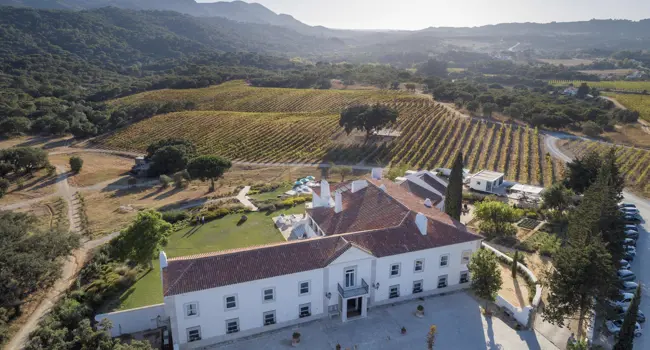
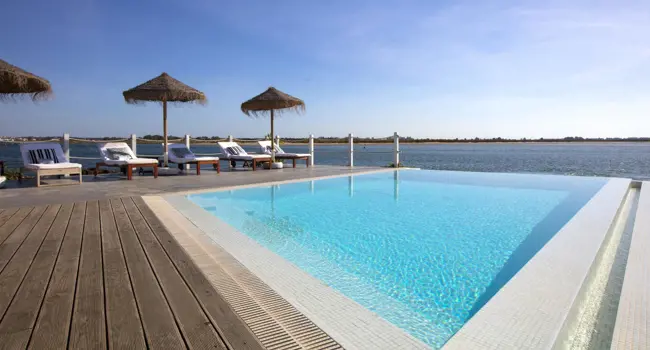
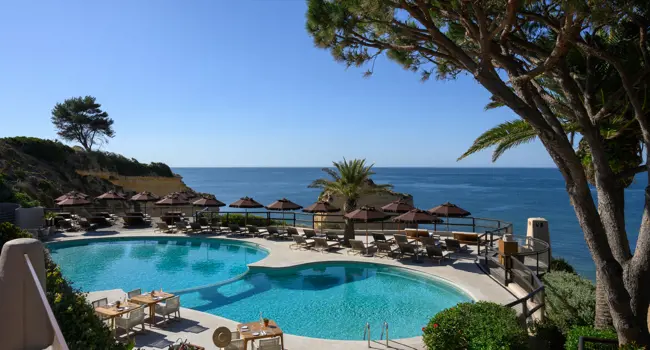
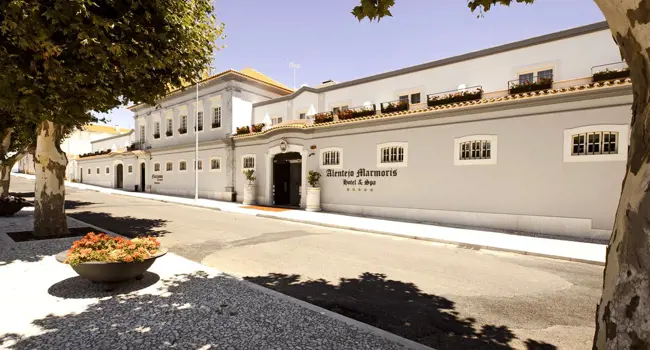
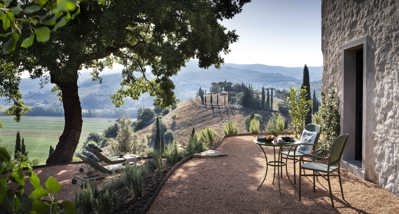
You stay in carefully selected Caractère hotels along the coast: first near Cascais, then in the region of Comporta or Santiago do Cacém and finally in or around Sagres.
Profile
For travellers who enjoy journeys along the ocean. Ideal for discovering lighthouses, cliffs, fishing villages and long beaches along Portugal’s west coast.
Day 1: Departure to Lisbon - Cascais
You fly to Lisbon, where your rental car will be waiting for you. You will stay 2 nights in a unique Caractère hotel.
Day 2: Praia do Guincho and Cabo da Roca
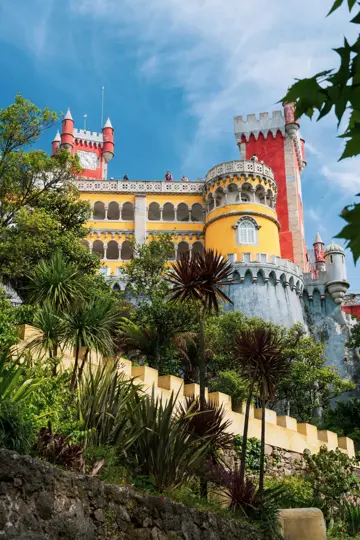
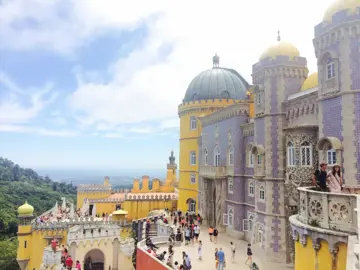
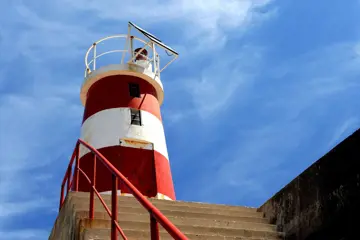
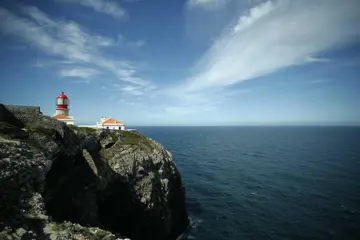
A few kilometres north lies the Cabo da Roca, a lighthouse atop an imposing 140m-high cliff, the westernmost point of mainland Europe. Optionally you can return via the Sintra palace complex.
Day 3: Cascais - Palmela - Comporta/Santiago do Cacém
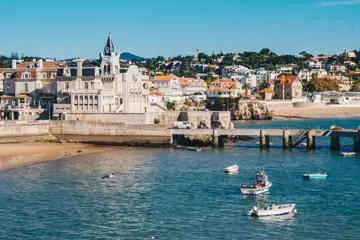
Pass through Estoril (with an optional stop), the impressive bridge over the Tagus to Palmela, a picturesque white town. You will stay here for 4 nights in one of our hotels.
Day 4: Cabo Espichel - Setúbal
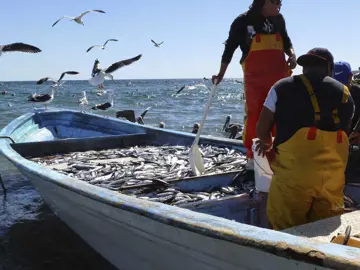
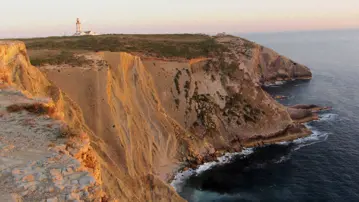
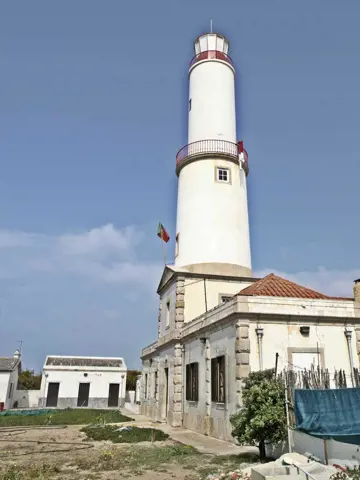
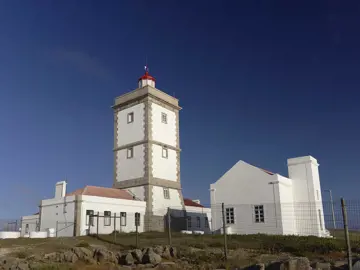
By ferry in Tróia, via the Serra da Arrábida and the fishing town of Sesimbra to Cabo Espichel, the second lighthouse with beautiful views over the ocean and coast. You will drive back via the port town of Setúbal, where tonnes of sardines are hoisted out of boats at the Doca dos Pescadores. Setúbal is also known for its oysters of which the sandbanks off the coast are full.
Day 5: Alcácer do Sal and Praia de Comporta
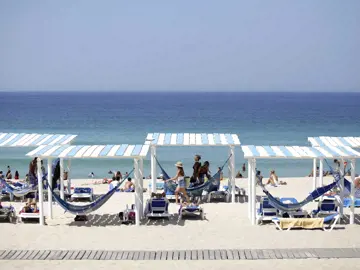
Here everything revolves around salt, cork and rice, three products that have defined life in and around this town for centuries. The salt flats and rice fields surrounded by vast forests of cork oaks are still visible. The Reserva Natural do Estuário do Sado is an impressive nature reserve of more than 23,000 hectares. The Praia do Comporta, about 25 km long, is a beautiful sandy beach with a few cafes and restaurants.
Day 6: Santiago do Cacém and the Costa Vicentina
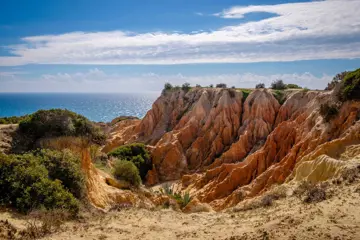
Through the peaceful town of Santiago do Cacém to Sines, birthplace of Vasco da Gama, and Porto Covo, a fishing village with small white houses, on to Vila Nova de Milfontes (thousand fountains), a quiet seaside town at the mouth of the Riva River.
Day 7: Comporta - Sagres
You will go to the protected coast to the Cabo de São Vicente and Ponta de Sagres. You will stay 3 nights in or around Sagres.
Day 8: Sagres and Cabo São Vicente
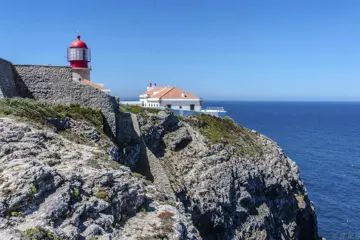
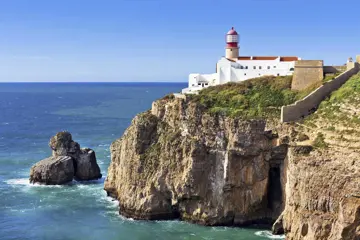
Since the 15th century, the Cabo de São Vicente has been an important landmark for ships, and the current lighthouse, with its range of 95km, is said to be the most powerful in Europe.
Day 9: The Western Algarve
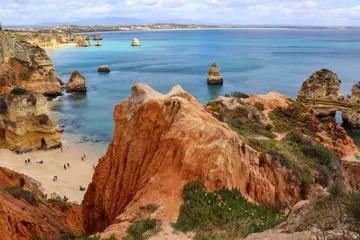
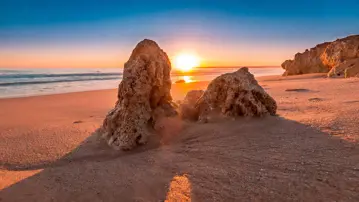
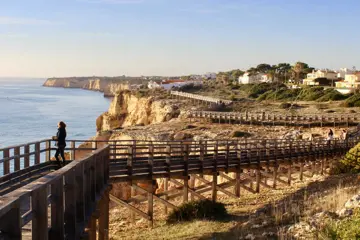
The western coast from the cape is still rugged with cliffs and beautiful beaches, sometimes hidden in a small bay among the rocks. From Lagos, many sailors set off on their voyages to explore and there was even a slave market. Today, it is a fun town where enjoyment is key.
Day 10: Going home
After a short drive, you will hand in your rental car at Faro airport and fly back home. Would you like to extend your holiday anyway? We'll take care of it!
What budget should you expect?
For this journey, you can expect a price starting from € 2,500 per person. This includes flights, a rental car, and the hotels. The exact price will depend on the period you travel, your final choices, and any optional extras.
Frequently asked questions about this round trip
Do you need a rental car for this trip?
Yes. Many lighthouses and coastal locations are outside towns and difficult to reach by public transport. With a rental car you can easily stop at beaches, cliffs and small villages along the way.
What makes Portugal’s west coast so special?
The Atlantic coast is wilder than many other parts of Portugal. High cliffs, strong ocean winds and long beaches shape the landscape. Lighthouses often stand in spectacular locations above the ocean.
Which regions do you discover during this trip?
You travel along several coastal regions: the coast near Cascais, the region around Setúbal and Comporta, the Costa Vicentina nature area and the western Algarve around Sagres.
Can this trip be extended?
Yes. Many travellers choose to stay a few extra days in the Algarve or combine this route with a stay in Lisbon.
Why book with Caractère?
- Best price guarantee
- Caractère extras
- Just one phone call or email away from our enthusiastic travel experts
- Pay safely
- No extra or hidden fees