Route
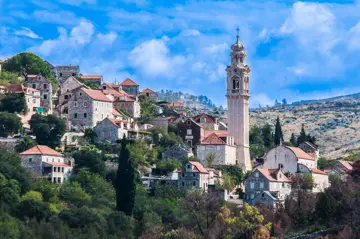
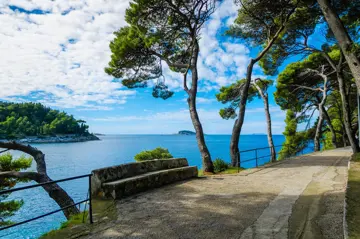
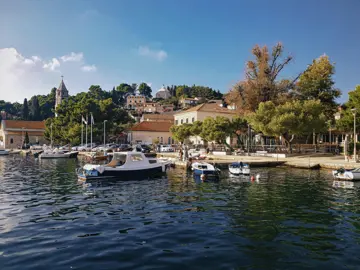
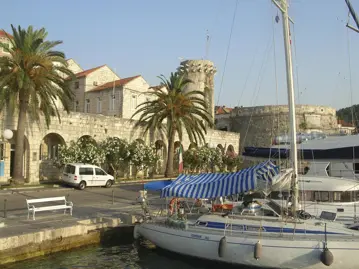
This journey follows the southern Dalmatian coast from Split to Dubrovnik, linking islands, historic towns and ever-changing views of sea and mountains.
Pace
Days balance exploration and relaxation, with manageable distances and enough time to enjoy each place at your own rhythm.
Highlights
From Diocletian’s Palace in Split and medieval towns to island crossings, waterfalls and the striking arrival in Dubrovnik.
Accommodation
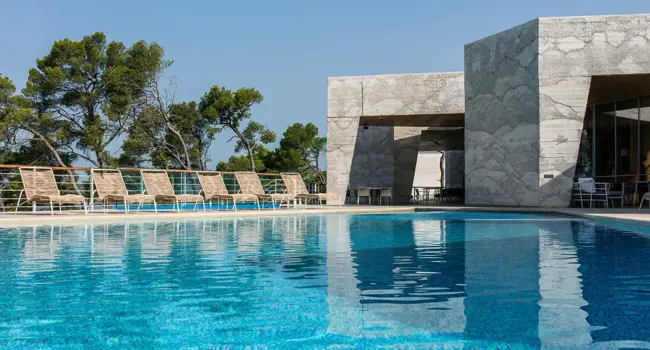
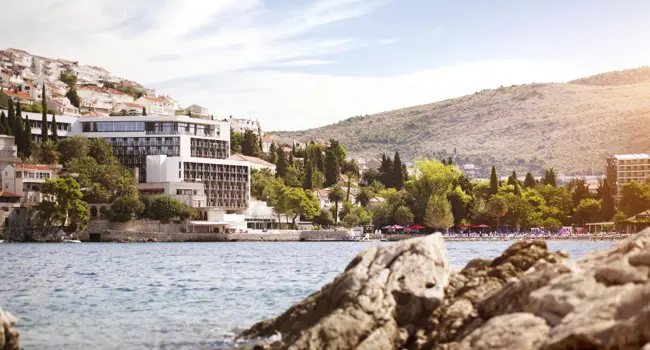
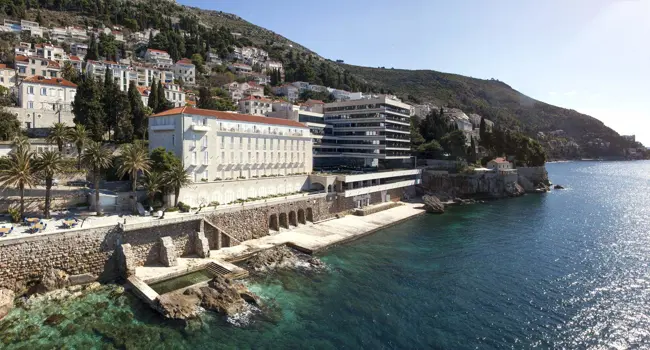
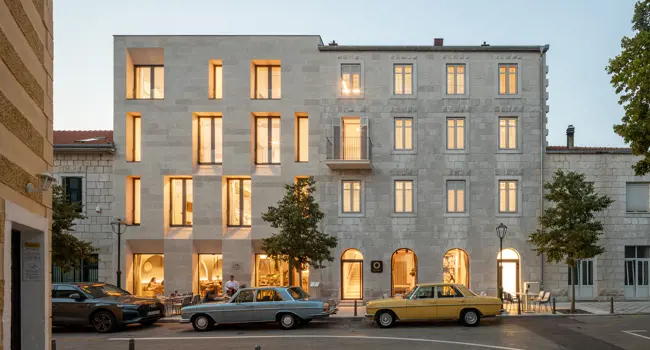
Carefully selected hotels focus on comfort, location and atmosphere, offering pleasant bases along the coast.
Profile
Ideal for travellers who enjoy combining culture, nature and the sea, with variety and comfort throughout the journey.
Day 1: Departure for Split
Once you’ve arrived in Split and collected your hire car, your journey can begin. You’ll spend the first five nights at one of our top hotels in Dalmatia.
Day 2: Historic Split
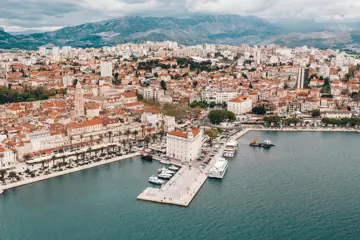
The adventure begins with a visit to Croatia’s most astonishing city centre, the impressive Palace of Diocletian. Long after the death of this Roman emperor, the luxurious apartments and associated barracks were plundered, windows bricked up, and new dwellings sprang up within the rooms. The imperial mausoleum made way for a grand cathedral. Today, it is a chaotic labyrinth of narrow streets and buildings. That is why the palace is sometimes referred to as Europe’s largest ‘squat’.
Day 3: Trogir – Šibenik
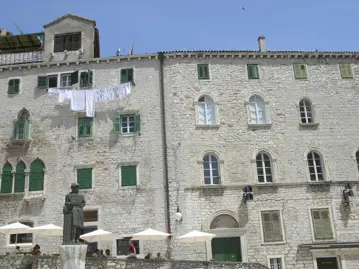
Trogir is a charming medieval town, founded by the Greeks, yet the atmosphere is thoroughly Venetian. The narrow cobbled streets, the quays where boats moor and St. Lawrence’s Cathedral with its magnificent western portal give this place an air of a bygone era. Some 45 kilometres further on lies the beautiful town of Šibenik with its picturesque medieval centre, its St. Anne’s Fort and its architectural masterpiece, St. James’s Cathedral, Croatia’s most famous church. A curious feature is the 71 townspeople, immortalised in a frieze on the cathedral because they refused to contribute to the church’s construction – a playful act of revenge by the cathedral builders.
Day 4: The Krka Waterfalls or the Kornati Islands
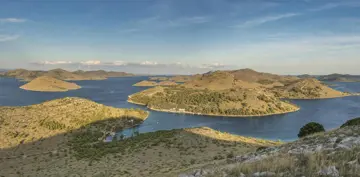
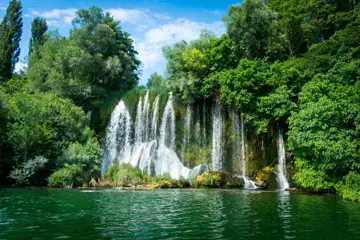
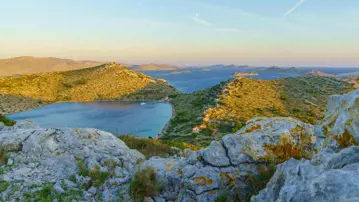
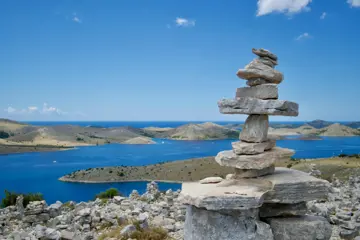
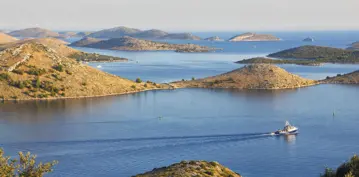
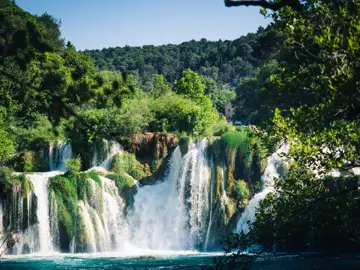
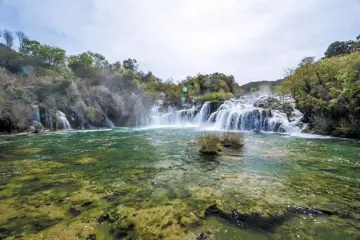
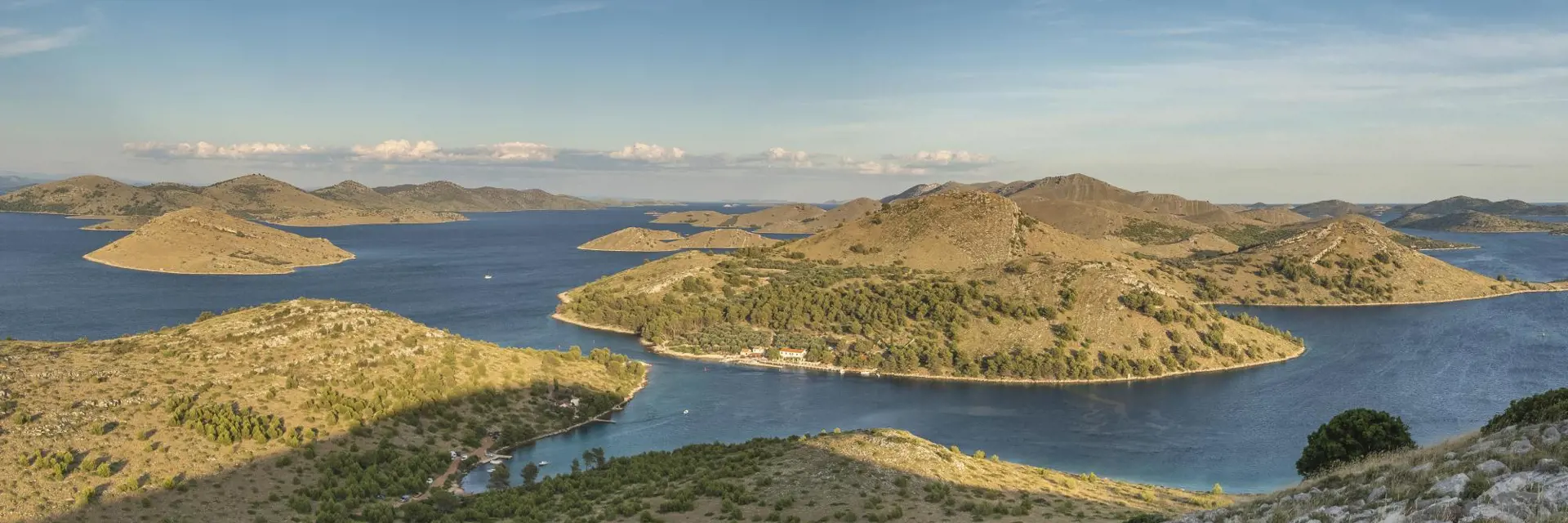
Krka National Park is best known for the 17 waterfalls of Skradinski Buk, where the water plunges 500 metres into the depths. Island lovers will prefer an excursion to the protected and unspoilt Kornati archipelago, 90 barren islands, deforested and stripped bare, accessible only by boat from Murter.
Day 5: The island of Brač or Hvar
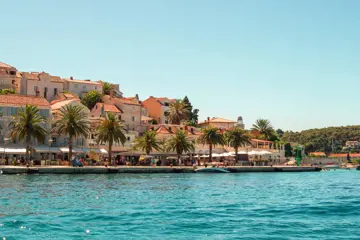
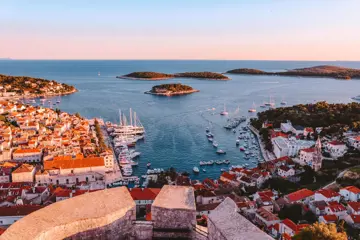
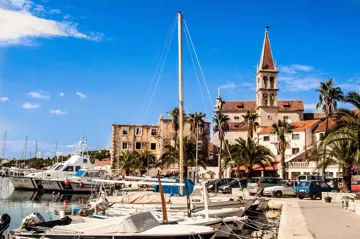
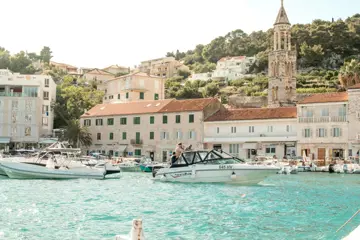
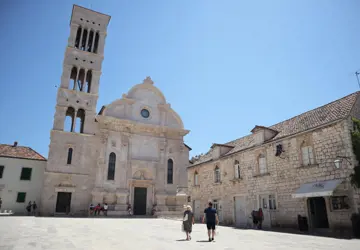
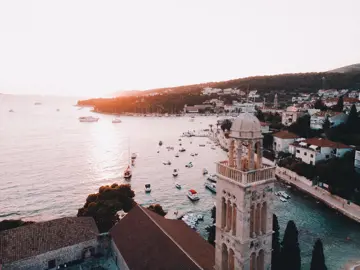
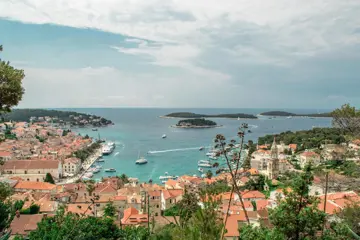
From Split, there are several crossings a day to the island of Brač, which has been renowned since ancient times for its pristine white limestone, popular with architects and sculptors; this limestone was used, amongst other things, in the construction of the White House in Washington. The south-west coast in particular, with its picturesque villages and harbours such as Ložisća and Milna, and the Dragonjik quarry en route, gives a good impression of this island. Hvar, Croatia’s sunniest and trendiest island, is best reached by catamaran from Split. Popular with the jet set, you’ll find plenty of luxury yachts, glamorous nightclubs and exclusive beaches here. The capital, Hvar, has many attractions and plenty of charm: the Spanish fortress, the Arsenal with its theatre, St Stephen’s Cathedral and a beautiful coastal road.
Day 6: From the Makarska Riviera to Dubrovnik
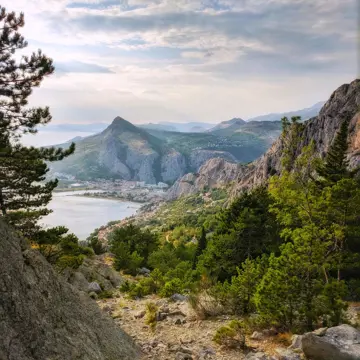
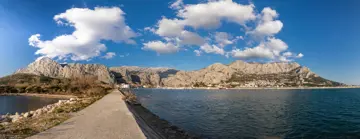
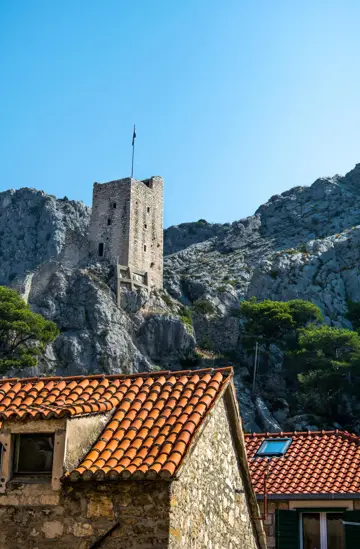
After a good 15 kilometres, the landscape changes very quickly; the silhouette of the impressive Biokovo Mountains towers dominantly over every village or town, including the beautifully situated Omiš or the delightful Brela. Makarska is a popular seaside resort and a spectacular combination of sea and mountains. Via Gradac and the fertile Neretva Valley, you cross the border into Bosnia and Herzegovina for about ten kilometres. After a day of exploration, you continue your journey towards Dubrovnik, where you will stay for three nights in a Caractère hotel.
Day 7: Dubrovnik, ‘Pearl of the Adriatic’
The former Ragusa sits on a rock surrounded by high ramparts and is one of the most beautiful fortifications in the world (UNESCO World Heritage Site). A stroll through the walled city with its impressive city gates or along the Placa will reveal the most remarkable sights: the Onofrio Fountain, the Franciscan and Dominican monasteries and the cathedral, the Loggia Square, the Sponza Palace and the Rector’s Palace. Also worth a visit are the terraces by the old harbour or a walk along the city walls.
Day 8: The Elaphiti Islands or Ston
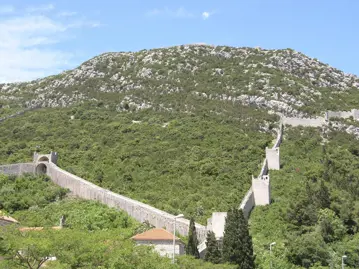
The best way to experience the tranquillity of the beautiful coastal landscape is with a boat trip to the Elaphiti Islands, an archipelago of virtually car-free islands: Lopud, Koločep and Šipan. You can also opt for a trip to the oyster village of Ston, with its five-kilometre-long wall on a mountain ridge. For many years, Ston served as the northern defensive gateway of the Republic of Ragusa, better known as Dubrovnik, and its fortifications were designed to repel attacks from the sea in order to protect the lucrative salt flats, which still border the village. The Renaissance palaces and Gothic houses remain silent witnesses to this turbulent period.
Day 9: Return home
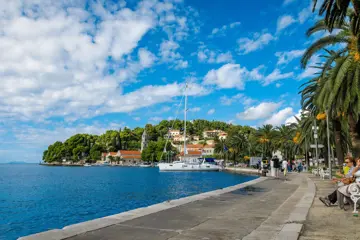
If the timing of your return flight allows, you can visit the charming seaside resort of Cavtat on the way. After this, your trip in Dalmatia is unfortunately over and you will return your hire car. Not quite ready to head home yet? We’d be happy to arrange an extension of your stay at one of our boutique hotels in Dubrovnik. Would you like to visit Montenegro as well? That’s possible too – be sure to pay a visit to Tivat or the Bay of Kotor.
What budget should you expect?
For this journey, you can expect a price starting from € 4,500 for two people. This includes flights, a rental car, and accommodation with bed and breakfast. The exact price will depend on the period you travel, your final choices, and any optional extras.
Frequently asked questions about this Dalmatian Coast tour
What is the best time to visit the Dalmatian Coast?
The ideal period runs from May to September, as the weather is perfect for both cultural visits and time on the islands. In spring and autumn, you’ll also enjoy a quieter atmosphere at popular attractions such as the city walls of Dubrovnik.
Is a hire car necessary for this route from Split to Dubrovnik?
Yes, a hire car is strongly recommended to enjoy complete freedom along the spectacular Makarska Riviera. With your own car, you can easily reach hidden gems such as the walls of Ston and panoramic viewpoints in the Biokovo Mountains.
What makes this tour of Southern Dalmatia unique?
This route combines the impressive Roman history of Diocletian’s Palace with the unique natural power of the Krka waterfalls. The trip offers an unrivalled contrast between the trendy atmosphere on the islands and the aristocratic beauty of the ‘Pearl of the Adriatic’.
Why book with Caractère?
- Best price guarantee
- Caractère extras
- Just one phone call or email away from our enthusiastic travel experts
- Pay safely
- No extra or hidden fees